
Capture
LIVE
cam-04 · aisle
Live feed · RTSP
live feed → understanding → alert
A reference technical solution for sub-second event detection on live feeds. Attach an RTSP source, declare an event in natural language or as a composed index, subscribe to alerts. Every payload carries the matching clip, frame, and confidence score.
RTSP frames are normalized on ingest, sampled at a configurable rate, and run through the index stack (including BYO classifiers). A match builds an alert envelope (event, confidence, clip URL, frame, source tags) and dispatches it via your subscriber.
Realtime Alert · Architecture
Three SDK calls. No frame pipelines to operate. No model serving to manage.
RTSP, ONVIF, RTMP, screen + audio capture, WebRTC. One ingestion path; VideoDB handles the codec normalization and clock alignment.
# attach
rtstream = coll.connect_rtstream(
  url="rtsp://cam-04",
  name="cam-04",
)
rtstream.start()
In natural language or as a composition of indexes. Confidence threshold, cooldown, scope. The platform compiles it into a continuous index pass.
# define
event_id = conn.create_event(
  event_prompt="a person falls",
  label="fall",
)
scene_index = rtstream.index_visuals(...)
Webhook, WebSocket, or pager. Every alert carries the matching clip URL, the frame timestamp, and the source context. Auditable by default.
# subscribe
alert_id = scene_index.create_alert(
  event_id=event_id,
  callback_url="https://ops/page",
)
from videodb import connect

conn = connect()
coll = conn.get_collection()

# 1. Define the event once. Attach it to every camera index.
event_id = conn.create_event(
  event_prompt="a person falls or slips on the floor",
  label="fall_in_aisle",
)

for cam in fleet:
  # 2. Attach and start the live source.
  rtstream = coll.connect_rtstream(url=cam.url, name=cam.id, store=True)
  rtstream.start()

  # 3. Run a continuous visual index on sampled frames.
  scene_index = rtstream.index_visuals(
    prompt="Detect safety events and return evidence.",
    batch_config={"type": "time", "value": 2, "frame_count": 5},
    name="safety_monitor",
  )

  # 4. Subscribe. Alerts include stream/player evidence.
  scene_index.create_alert(
    event_id=event_id,
    callback_url="https://ops.example.com/page",
  )

# Webhook payload: {label, confidence, timestamp, stream_url, player_url}
The entire pipeline runs inside VideoDB. Your application only sees the alerts.
~280 ms typical. End-to-end alert latency.
Extract + index + match + deliver typically lands under 300 ms. Configurable sample rate (default 5 Hz) trades latency vs. cost.
A defined event won't refire for its cooldown window. Prevents alert storms when the underlying condition persists across many frames.
Each alert ships with the matching clip URL, a still frame, the confidence score, and your source tags. Forwardable to a SIEM or case-management system.
Same SDK shape per camera; the platform handles fan-out, GPU scheduling, and back-pressure. Per-camera or fleet-wide event policies.
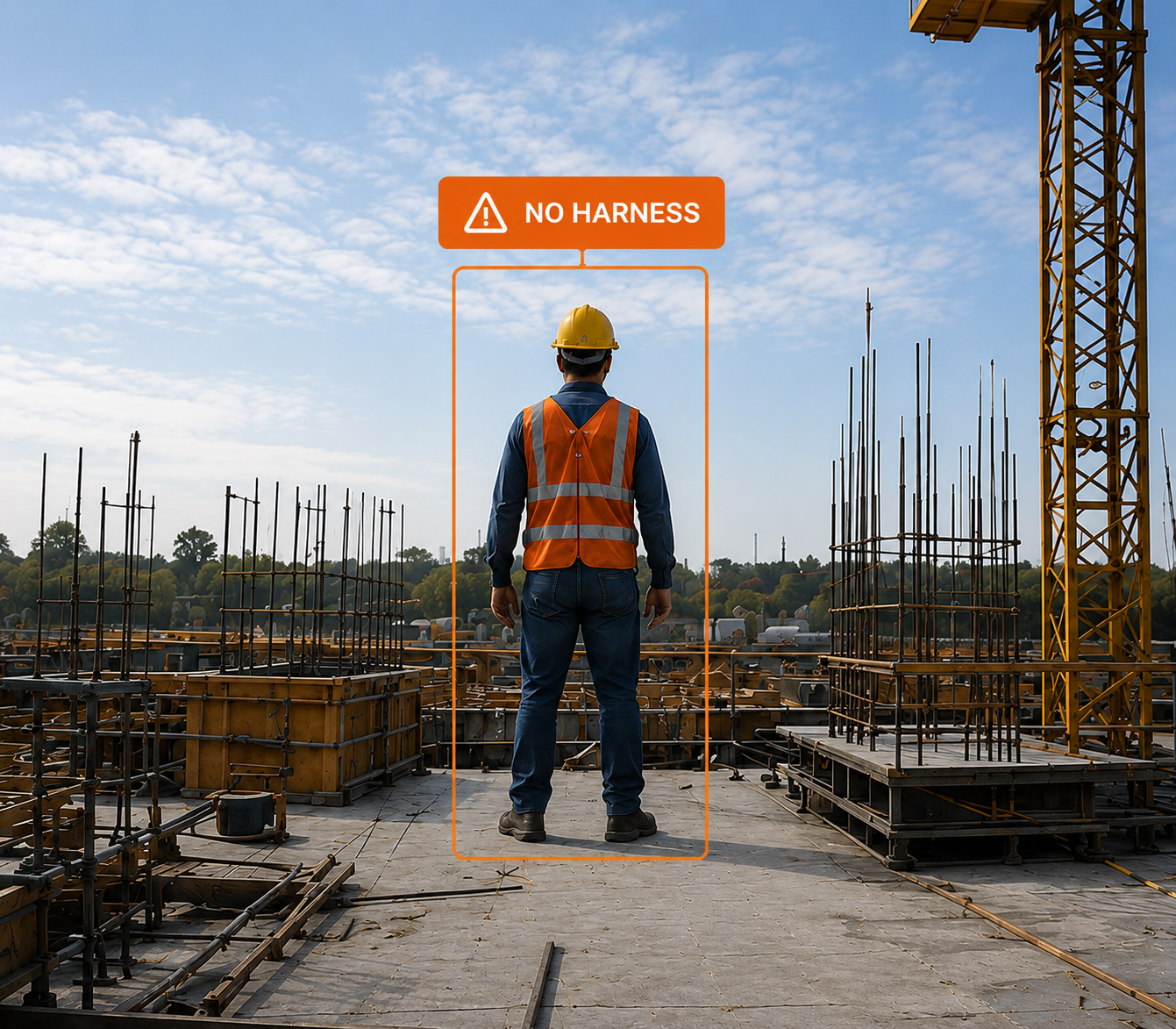
Fall detection in warehouses, PPE compliance on factory floors, hazard alerts on construction sites. Custom-trained classifiers plug in as indexes; the platform runs them on every frame.
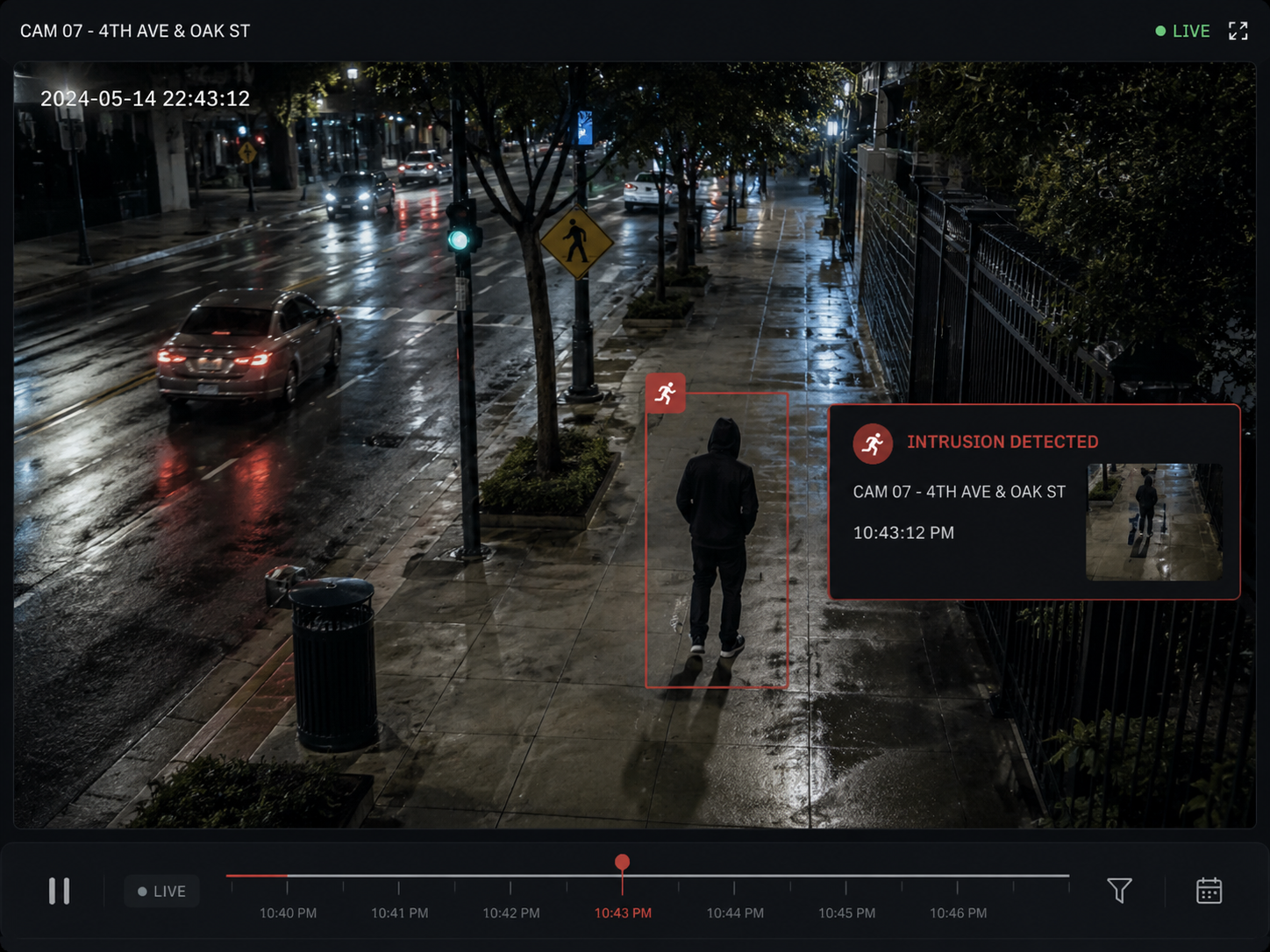
Loitering, intrusion, perimeter breaches across fleets of cameras. Each alert lands as a webhook with the matching clip URL and the source frame, ready for triage in a SOC.
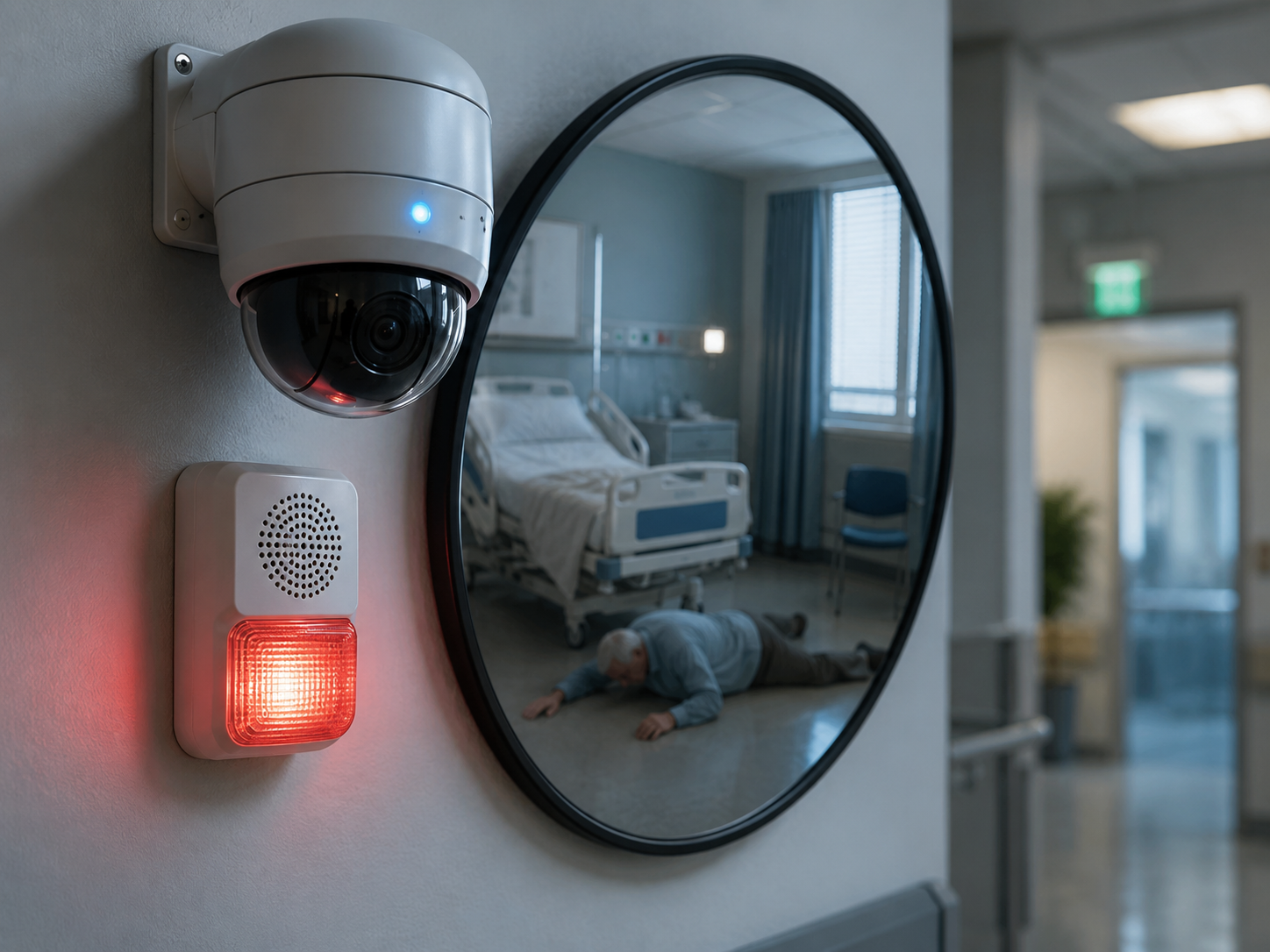
Patient-fall detection in hospital rooms with per-room confidence thresholds and cooldown windows. Alert payloads carry the clip, frame, and ward context for the on-call nurse.
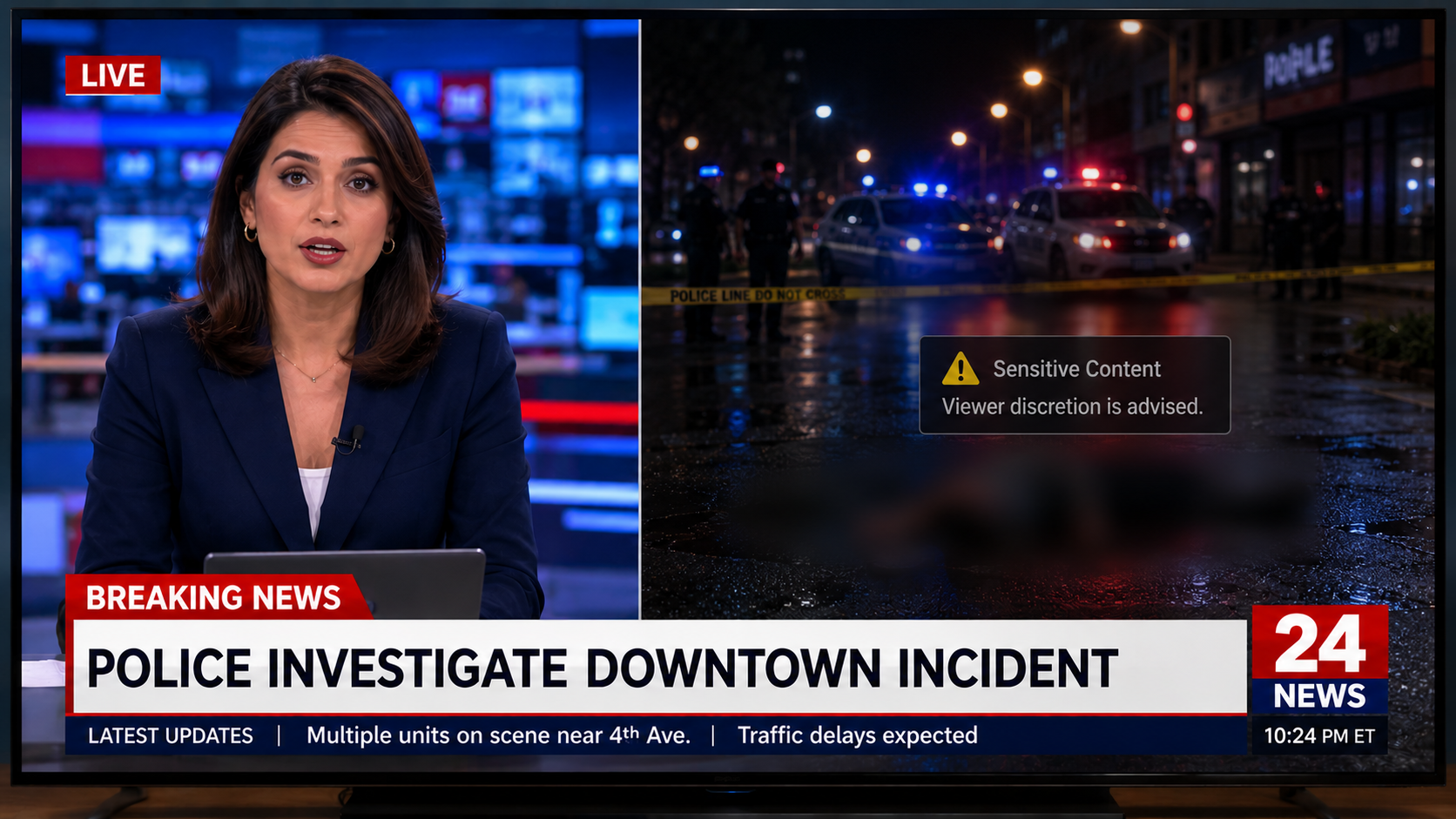
Detect unsafe content, sponsor-logo violations, and brand-safety flags across live broadcast feeds. The standards desk gets a clip plus the frame; the platform handles cooldowns per policy.